WHAT DOES YOUR PERIOD BLOOD SIGNIFY?
ALL ABOUT PERIODS & ROLE OF CONTRACEPTIVES
Menstruation refers to the regular shedding of the uterine lining (endometrium) in the form of blood and clots through the vagina. It occurs every month in females with a healthy uterus. The menstrual cycle ranges from 21 to 35 days from the count of one period to the first day of the next period. It is an indicator that the female is not pregnant and the body can shed the healthy walls of uterus and begin preparing for the next month.
During the menstrual cycle, the hormones in the female reproductive system make eggs in the ovaries to mature. When an egg is mature, it means that it is ready to be fertilized by a sperm. Simultaneously, these hormones also thicken the walls of the uterus, therefore preparing it for a fertilized egg to provide it nutrition and make a safe space for the embryo to develop in it.
If the mature egg is not fertilized by a sperm cell; the body does not need the thick lining of the uterus. Hence, the lining breaks down and blood, nutrients, tissue (in the form of clots) flow out of the body through the vagina.
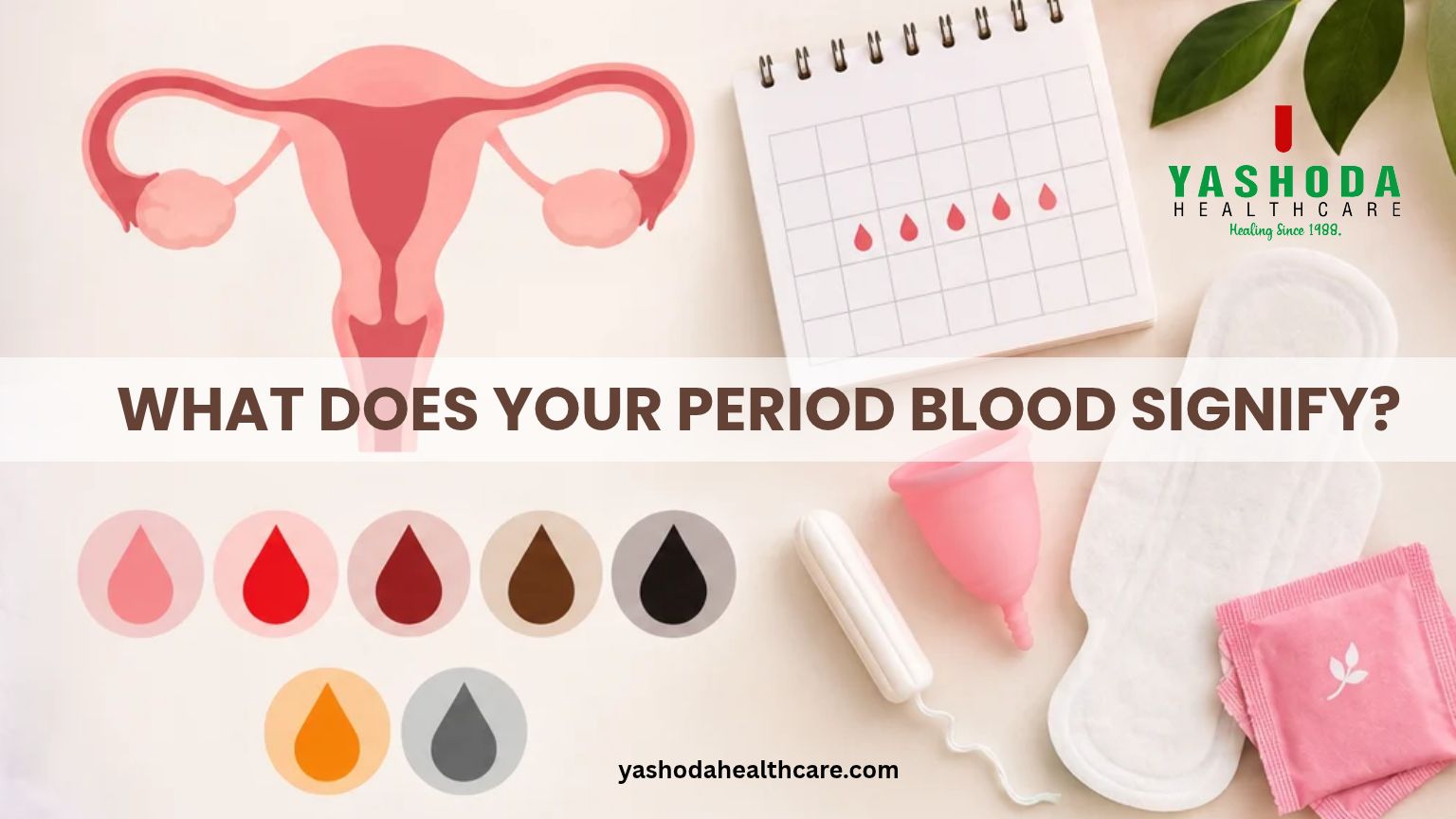
The period blood flow can be light or heavy, depending from person to person. It may also vary in color (different shade of red), as per the person’s nutritional levels or hormonal levels. Different colors of period blood can signify different things.
What Does Your Period Blood Signify?
- Pink – Often occurs at early stage of periods, pink is a mixture of blood, vaginal discharge or cervical mucus. It can happen on lighter flow days or end of the cycle too.
- Bright Red – Typically during the heaviest flow days, it indicates fresh, fast-flowing blood determining healthy flow.
- Dark Red or Brown – Typically represents older blood in the uterus that has It is very common at the very beginning or end of the periods.
- Black – Blood that has lingered the longest in the uterus might turn black and fully oxidize with its interaction with oxygen.
While all the above identified colors are quite common and not a cause of concern in mostly cases, sometimes the period blood can be of uncommon color which may indicate underlying health issues:
- Orange or Yellow – Potential infection, especially if it is accompanied by itching or foul odor
- Grey – Possible infection, hormonal imbalance or pregnancy complication in such cases, immediate medical help should be taken.
How to Take Care of Your Menstrual Health?
Menstrual hygiene is the most important for your health as it can help prevent infections, reduce odor and keep you comfortable during your periods. Certain healthy habits should be adopted during periods such as:
- Using Menstrual Products – Maintaining proper hygiene while using menstrual products is key to avoiding infections. In case of disposables such as pads, tampons or period panties,these should be appropriately wrapped with toilet paper, tissue and then thrown in the trash bin. In case of reusables like menstrual cups, it is important to wash them properly with water after draining the collected blood. Changing pads, tampons or emptying menstrual cups every 4 to 8 hours is advised, depending upon the blood flow.
- Wear Breathable Fabric – Period days accompany heat flashes and sweat in many people; therefore, it is recommended to wear lightweight clothes (especially underwear).
- Keep Your Genital Area Clean – Washing the vagina every day or with every change should be a practice.
- Using Unscented Sanitary Products – Scented tampons or pads contain perfumes and added odor agents that might irritate the vagina and cause infections.
- Hydrate Yourself – Hydration is key as the body feels dehydrated a lot during Adding liquids in diet can also help wash out the urinary tract to prevent any infections.
- Track or Monitor Your Periods – This is very important in today’s time because with growing allergies, unhealthy practices and changing world, period health needs to be monitored and medical help should be taken in case of any need. Irregular periods can be a sign of conditions like diabetes, thyroid problems or celiac diseases.
While most of these precautions or healthy practices are self-checks and to be followed by oneself, in case of irregularities in periods or concerns like excessive cramps, seeking medical help should be non-negotiable.
Role of Contraceptives and Safe Sex During Periods
While the chances of pregnancy during period sex are lower, conception is still possible. Along with that, menstrual blood can facilitate the transmission of blood-borne STIs like HIV. However, that does not mean that sex during periods cannot be made safer. This is where role of contraceptives comes into play:
- Barrier methods like using condoms are a great idea to prevent any STIs
- Safe sex practices such as maintaining hygiene of the vagina and the environment by laying sheets or towel around can help manage mess. Removing menstrual products such as discs/cups or tampons is essential before engaging in intercourse
- Emergency contraception such as the morning-after pill to avoid any second-guesses can also be a method of ruling out any chances for unwanted pregnancy
Period sex can be safe and pleasurable provided that appropriate precaution is taken to avoid any hassle or discomfort.