PCOD VS PCOS: Understanding Key Differences, Which One Do You Have, Symptoms, Causes & Treatment Options for Each
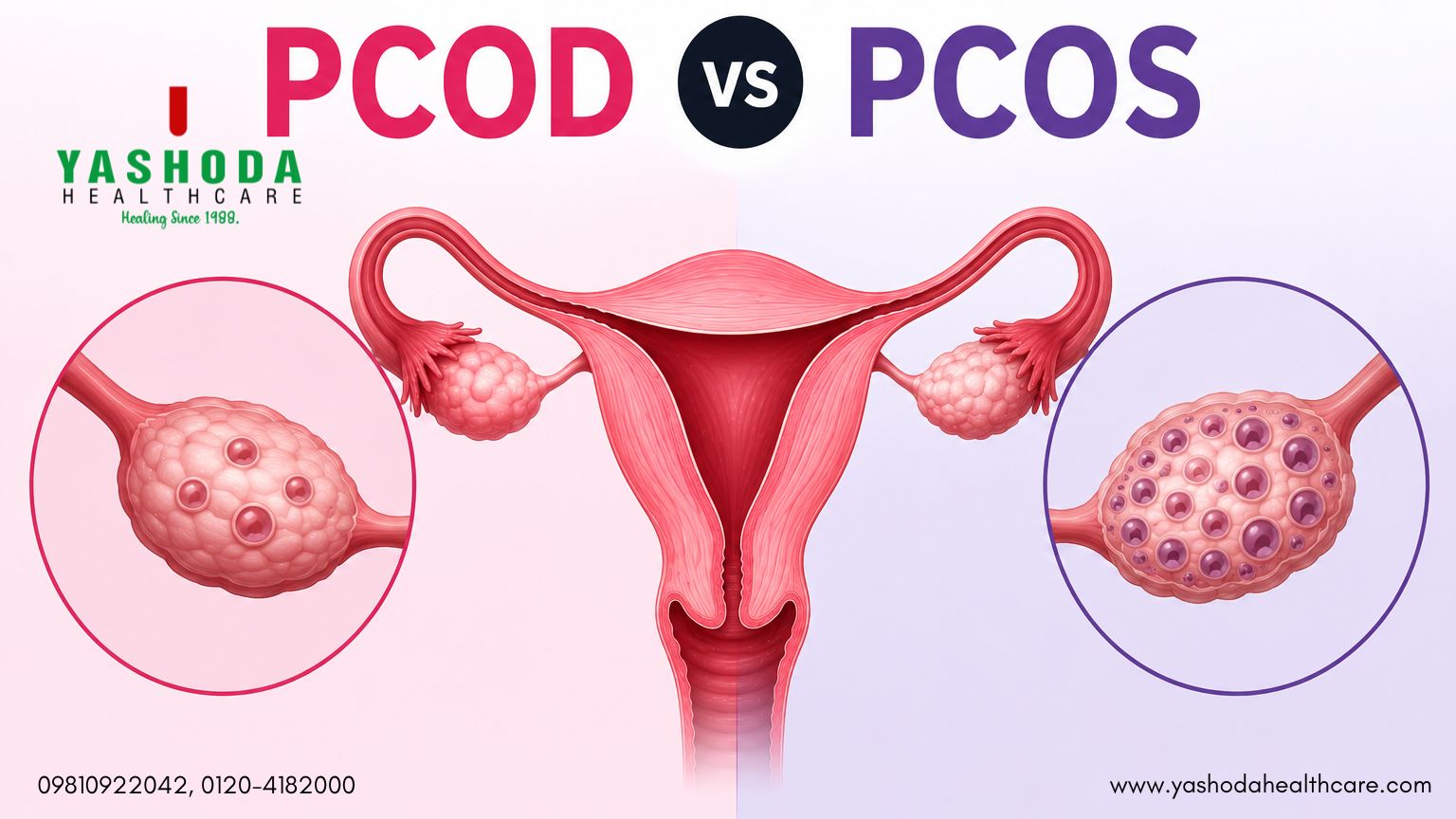
Polycystic Ovarian Disease (PCOD) and Polycystic Ovary Syndrome (PCOS) are two of the most common conditions affecting women’s hormonal and reproductive health. While they are often confused amongst each other and used interchangeably in terminology, PCOD and PCOS are two distinct endocrine disorders, varying in terms of causes, symptoms and their long-term effects on women’s health and well-being.
Understanding Polycystic Ovarian Disease (PCOD) & Its Symptoms
Polycystic Ovarian Disease (PCOD) occurs when the ovaries produce immature or partially mature eggs, which may cause cysts over time. It is a hormonal disorder that is characterised by enlarged ovaries where multiple smaller cysts develop.
Key Symptoms Include –
- Irregular menstrual cycles
- Unexplained weight gain
- Acne breakout and oily skin
- Excessive hair loss
- Fatigue
Understanding Polycystic Ovary Syndrome (PCOS) & Its Symptoms
Polycystic Ovary Syndrome (PCOS) is a broader condition that encompasses not only ovarian dysfunction but also metabolic and hormonal conditions, that affect not only the ovaries but also other systems in the body. In addition to ovarian cysts, PCOS also comes with insulin resistance and androgens’ imbalance (male hormones). Insulin resistance can cause glucose intolerance which leads to type 2 diabetes while higher levels of androgens can lead to symptoms like hair loss, acne and fertility issues.
Key Symptoms Include –
- Persistent acne
- Obesity, accompanied with difficulty in losing weight
- Excessive facial and body hair
- Severe menstrual irregularities
- Infertility
- Higher risk of diabetes and heart diseases
Difference between Polycystic Ovarian Disease (PCOD) and Polycystic Ovary Syndrome (PCOS)
- Prevalence – PCOD is more common in occurrence than PCOS, affecting about 33% of women worldwide while the PCOS is rather uncommon and affects 45-20% women of reproductive age worldwide.
- Severity – PCOD is manageable with dietary and lifestyle shifts. PCOS is more severe and requires medical intervention.
- Infertility Issues – Females with PCOD can ovulate consistently and can also conceive. PCOS, on the other hand, causes huge infertility issues.
- Hormonal Imbalance – PCOD happens as a result of mild hormonal imbalance, primarilyaffecting oestrogen and progesterone levels. PCOS is a result of significant hormonal imbalance, including elevated androgen levels.
- Menstrual Cycle – While PCOD individuals might face irregular or slightly delayed period cycles, PCOS often causes highly irregular periods or amenorrhoea (completely absent periods).
- Metabolic Impact & Overall Health Complications – PCOD results in minimal impact on metabolic health and does not lead to severe long-term health issues, if lifestyle changes are managed properly. While oily, skin with mild acne and hair thinning come as by-products, they may not be as severe as in PCOS.
Insulin resistance, risk of type-2 diabetes and high cholesterol, accompanied with serious complications like hypertension, cardiovascular diseases and endometrial cancer are all a result of PCOS that cause extreme distress in the individual’s life.
Treatment for Polycystic Ovarian Disease (PCOD) and Polycystic Ovary Syndrome (PCOS)
Polycystic Ovarian Disease (PCOD) – It can generally be balanced by adopting a balanced diet and reducing sugar intake.
- Regular exercises to maintain body weight
- Managing stress through yoga and meditation
- Period regulation medicines, if the need occurs
Polycystic Ovary Syndrome (PCOS) – Hormonal therapy is advised to manage androgen levels
- Metabolic issues such as insulin resistance need to be addressed by adopting healthy practices such as weight management, physical activity and balanced nutrition
- Fertility treatments should be taken if planning a pregnancy
- Other lifestyle modification similar to PCOD
While both conditions involve ovarian dysfunction and hormonal imbalance, Polycystic Ovarian Disease (PCOD) is a singular and milder condition that is often reversible with lifestyle changes. Polycystic Ovary Syndrome (PCOS), on the other hand, is an umbrella term that comes with more serious metabolic and hormonal abnormalities. Medical help should be taken to cure these conditions. But more importantly, healthy lifestyle practices should be adopted to manage stress and some of the symptoms.
Best Hospital & Doctors for Polycystic Ovarian Disease (PCOD) & Polycystic Ovary Syndrome (PCOS) in Delhi NCR (Ghaziabad, Noida)
Yashoda Hospital & Research Centre, Nehru Nagar, Ghaziabad, is a beacon of some of the highly experienced and revered gynaecologists in Delhi NCR. Also regarded as one of the best multi-speciality hospitals in Delhi NCR, Yashoda Hospital is equipped with advanced technologies and trusted for its patient-centric approach for treatment across a multitude of super specialities.
Dr. Shashi Arora is the Head of Department & Senior Consultant, Obstetrics & Gynecology and one of the best doctors in the field of gynaecology. She has performed more than 90,000 deliveries, 85% of which have been normal deliveries.
Dr. Jyotsana Agarwal, Senior Consultant, has more than 30 years of experience in the field and also specialises in high-risk pregnancy care. Her specialisations include – infertility treatment, vaginal discharge, Polycystic Ovarian Disease (PCOD) and menopausal problems.
Dr. Kanika Agarwal is a Consultant in the Department of Obstetrics & Gynaecology. She has more than a decade of medical experience. Dr. Agarwal specialises in normal deliveries, LSCS, post Csection vaginal births. Her qualifications and experience in the field of gynaecology have helped serve numerous patients over the course of her career
For bookings or appointments, you may contact us at 98109 22042, 0120-4182000.
Also Read: Is Having Sex During Periods (Menstruation) Safe?