
Schizophrenia: Signs, Symptoms, Management & Treatment
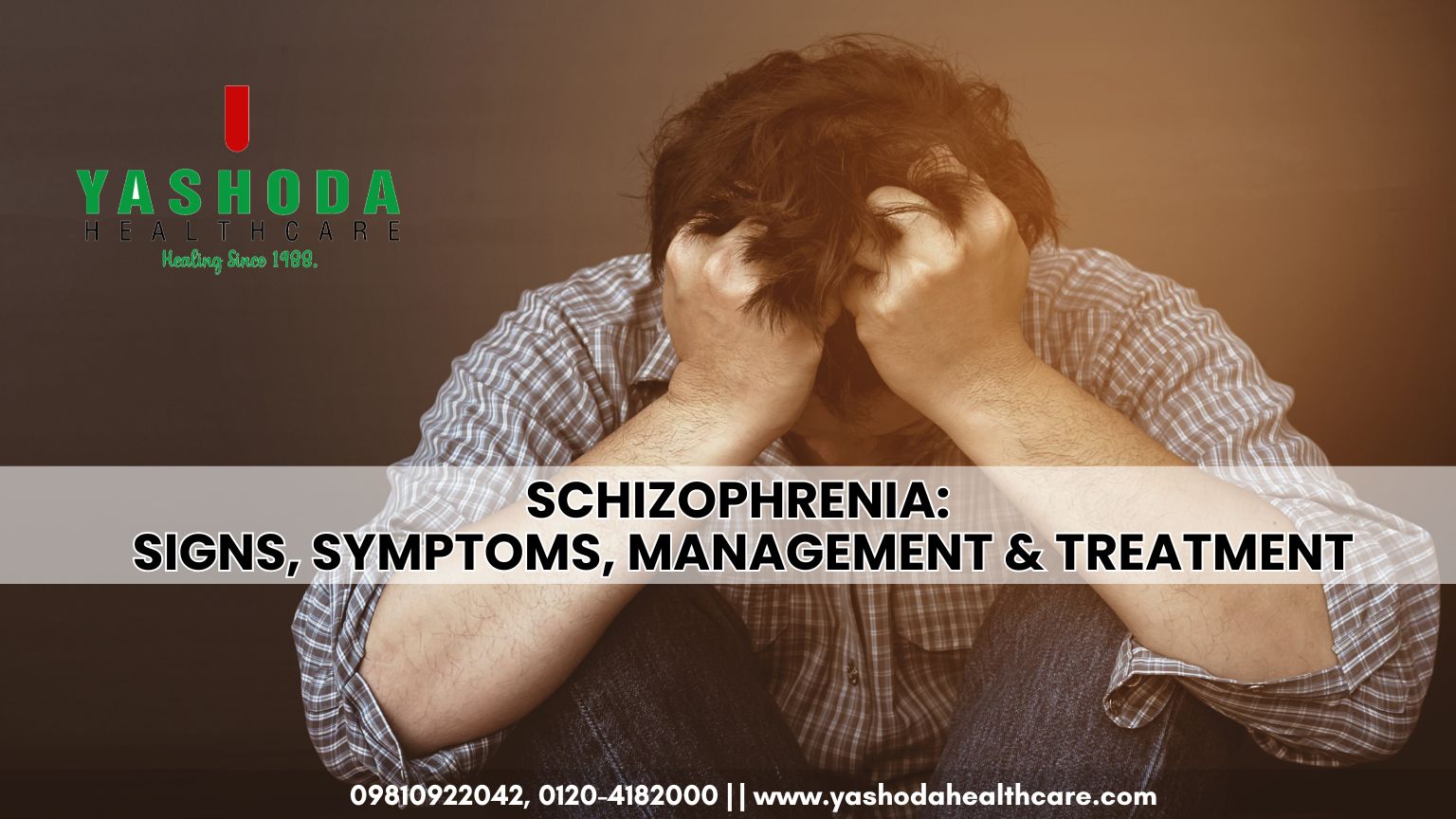
What is Schizophrenia?
Schizophrenia is a debilitating disorder and a descriptive term for a group of psychotic disorders that can deteriorate the personal, social and occupational functioning of people as a result of disturbed thought processes, strange perceptions, unusual emotional states and motor abnormalities. It can also affect how you think, feel and behave and blur the line between reality and imagination.
Signs & Symptoms of Schizophrenia
Common signs and symptoms of schizophrenia tend to emerge in late adolescent years or early adulthood and are as follows:
Positive Symptoms: These are psychotic behaviours comprising thought emotions and related behaviours.
- Hallucinations: These are perceptions that occur in the absence of an external stimulus. People with schizophrenia may sense things that are not real or present in reality. The most common hallucinations can be auditory, visual, sensual, taste-related or smelling things that have no roots in reality.
- Delusions: Many people with schizophrenia tend to develop delusions. These are false beliefs that are firmly held on inadequate grounds or even in presence of contradictory evidence. A delusion has no basis in reality such as constantly feeling threatened and attached or believing in things that do not exist.
Negative Symptoms: People with schizophrenia can experience pathological deficits. Just like positive symptoms outline ‘excesses’, negative ones outline the ‘deficits’ in thoughts, feelings and actions being experienced, which are as follows:
- Avolition: It is a severe lack of motivation or the inability to start or sustain purposeful everyday chores. Extreme apathy is a major sign that may be experienced.
- Alogia: It is poverty of spontaneous speech or tendency to give very brief and empty responses.
- Affective Flattening: Showing very less anger, sadness, joy and other feelings, or not showing any emotions at all, hints towards affective flattening in people suffering from schizophrenia.
- Anhedonia: A general loss of interest towards life or inability to experience pleasure like before in activities one used to enjoy characterises anhedonia.
- Asociality or social withdrawal from friends and family and experiencing a severely reduced desire to engage in any social or interpersonal contact is a common symptom of schizophrenia.
Psychomotor Symptoms: People with schizophrenia also show bodily and behavioural symptoms, known as psychomotor symptoms. They are also often called disorganised symptoms due to disorganised thoughts, speech and behaviours.
- Catatonia: People with schizophrenia might move less spontaneously, make odd grimaces or gestures. Some remain motionless and silent for long stretches (catatonic stupor); while others might show extreme rigidity or upright posture for hours (catatonic rigidity); some patients might assume awkward positions for long periods of time (catatonic posturing).
- Disoriented Speech or Thoughts: Difficulty in organizing thoughts make such people switch topics abruptly or make up words (derailment of speech), or even at times speak in a jumbled manner.
- Impaired Cognitive Functions: Problems in processing information while making basic decisions or a reduced attention span and poor memory are all signs of an impaired cognitive system that schizophrenic individuals experience.
Management and Treatment of Schizophrenia
Schizophrenia can be diagnosed by learning more about the person’s symptoms and observing his/her behaviour over a period of time. Once it is identified, a trained psychologist or psychiatrist will compare those symptoms with the criteria in the DSM-5 (Diagnostic and Statistical Manual of Mental Disorders) and a complete psychiatric evaluation is thereby conducted. Only trained and licenced medical practitioners can evaluate and conduct the tests and diagnose the individual of the disorder.
Treatment of schizophrenia ranges from the basic to severe symptoms:
- Medications such as antipsychotics are prescribed to help manage symptoms. The first-generation antipsychotics block dopamine receptors, while the second-generation targets dopamine and serotonin receptors. These help balance brain chemicals as it is the imbalance of neurotransmitters that cause symptoms like delusions and hallucinations.
- Psychotherapy such as CBT (Cognitive Behavioural Therapy) may help understand how thoughts are influencing certain behaviours and by learning of the root cause, the therapist can help cope with them.
- Rehabilitation with supportive services like resilience training, family therapy and cognitive support, all together can improve coping skills, communication and long-term progress.
How to Deal with Patients of Schizophrenia?
Schizophrenia, like most other mental disorders, comes with stigma around it which adds to the existing stress and suffering in the patient’s life. It is very important to be sensitive about it and deal with patients in a mature and sound manner.
- Communicate effectively: One should not try to convince them of their wrong perceptions and myths or argue about the presence of their perceptions. Such rigidness can only trigger more negative thoughts and responses from patients. Instead, listening to them and understanding them with a neutral ground is important.
- Be supportive of the treatment, medication and facilitate appointments to make their lives simpler and help in managing added stress.
- Understand and recognise the warning signs or any repetitive triggers that may worsen their condition and always call for help when necessary.
- Setting personal boundaries, avoiding burnout and also seeking help for oneself is very important. Finding good support groups and leaning on healthy support systems will make life easier and more manageable to deal with it on a daily basis.
Best Hospital & Doctors for Treating Schizophrenia
Yashoda Hospital and Research Centre, Nehru Nagar, Ghaziabad is one of the best multi-speciality hospitals in Delhi NCR that offers comprehensive treatment, care and rehabilitation for patients with Schizophrenia and other mental disorders. Our advanced technology, highly-skilled network of medical practitioners and premium healthcare system promises support and trusted treatment of patients.
Dr. Yesh Chandra Singh is a Consultant Psychiatric & Addiction Superspecialist, Department of Psychiatry at Yashoda Hospital, Nehru Nagar, Ghaziabad. An Alumnus of AIIMS, Delhi Dr. Yesh is an M.D. in addiction psychiatry and comes with a glorious 8 years of experience in the management of mental illnesses. His hands-on experience in Electroconvulsive Therapy (ECT) and Repetitive Transcranial Magnetic Stimulation (rTMS) adds to his merit.
For appointment or bookings, please call us at – 98109 22042/0120-4182000.
