Colon Cancer: Warning Signs, Stages, and Treatment
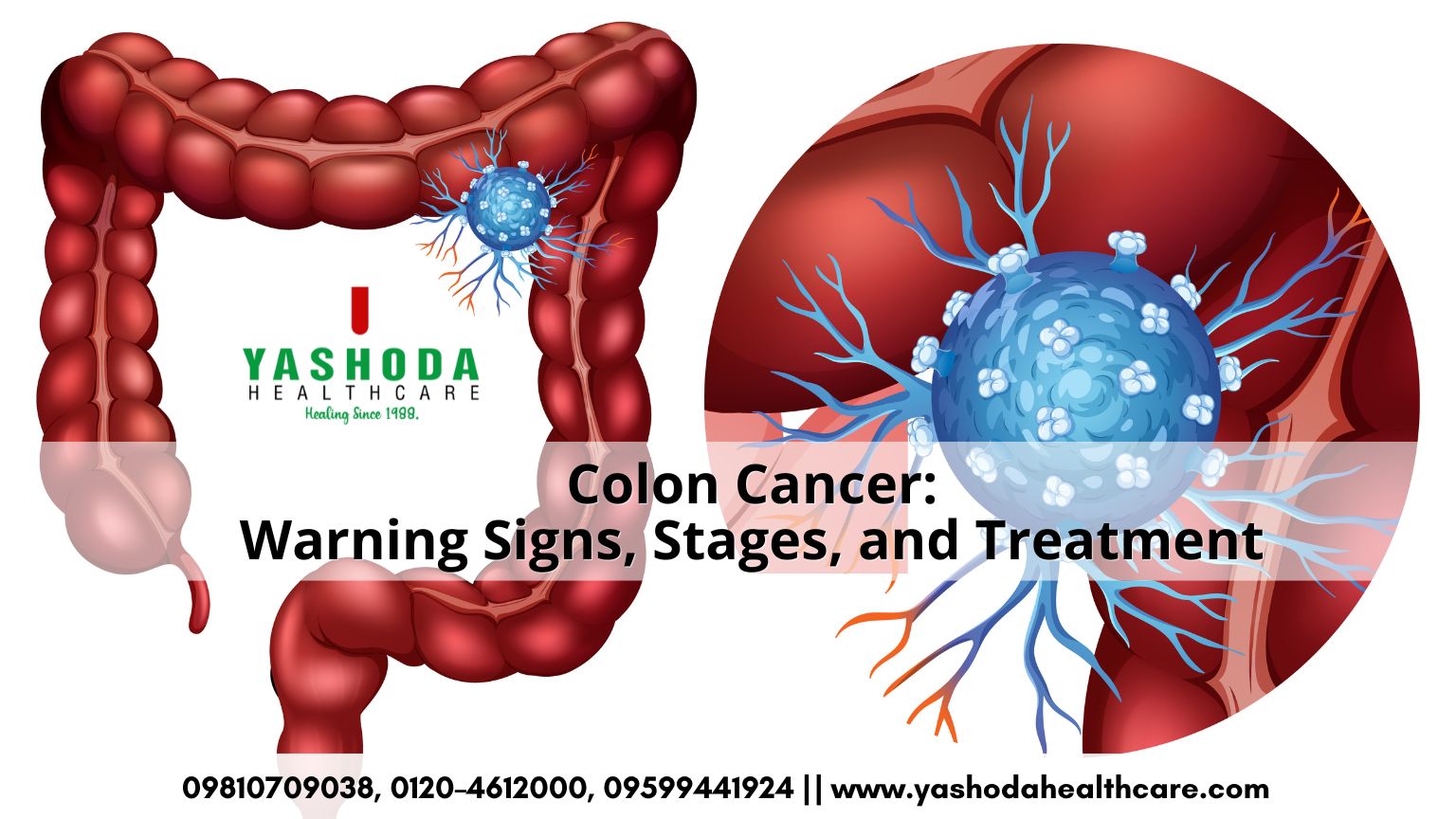
Colon Cancer or Colorectal Cancer is the cancer that starts in the inner lining of the colon and rectum. The colon makes up about five to six feet of the large intestine and is a part of the digestive tract to move waste (stool) to the rectum to be excreted out of the body through the anus. Since it makes up a significant part of our digestive system, the cancer cells in the colon or rectum (or both) can seriously alter a person’s life.
Colon cancer usually starts as a polyp (small outgrowths in the tissue lining the colon and rectum). These polyps are not cancerous; however, they can turn into cancer over time, if not treated before. Removing precancerous polyps can stop the cancer before it spreads further. However, if gone unnoticed, these polyps can grow into malignant cells and thereby take the shape of colon cancer.
Warning Signs & Symptoms of Colorectal Cancer
Most symptoms of colon cancer may seem to be like very day-to-day problems. It is only when they become persistent, painful, recurring or alarming, that a person should not think twice before seeking medical attention.
Abdominal pain, bloating, blood in stool, constipation or diarrhoea, feeling of residual excreta in the abdomen, persistent tiredness and/or unexplained weight loss are some of the most common signs and symptoms.
Causes of colon cancer may be genetically endowed, or can be due to lifestyle habits such as tobacco or alcohol consumption, obesity, susceptibility to more colon polyps, or inheriting certain diseases from one’s family.
Stages of Colon Cancer
Colon cancer can be divided into four stages:
Stage 0 – It is identified by the presence of precancerous polyps in the inner lining of colon or rectum
Stage 1 – Presence of a cancerous polyp in the colon wall
Stage 2 is typically divided in two sub-stages
2A – Cancer has spread through most of the colon wall except the outer layer
2B – Spread of cancer in the outer colon wall
Stage 3 – Spread of cancer to colon wall, lymph nodes and outer layer of the colon
Stage 4 – Spread of cancer in larger, distant areas of the body. This could be in distant lymph nodes or spreading through liver, lungs or ovaries.
Diagnosing Colon Cancer
Diagnosis of a colon cancer takes place after results from blood tests (including CBC/CMP) are obtained. CT scans, MRI, abdominal ultrasound etc. are conducted to get X-ray and detailed reports. A gastroenterologist may conduct a diagnostic colonoscopy to detect the cancer. They may remove a small piece of tissue to examine it under a microscope and assess the cells.
Surgery is the most common treatment method for colon cancer:
- Polypectomy – This removes the precancerous or cancerous polyps from the colon. A colonoscope is inserted into the rectum, guiding it to the polyp to remove them. It is ideal for early, low-risk cancer.
- Colectomy – If a polyp is too large to be removed, a detailed surgery may be performed to remove some section of the colon, and all other associated lymph nodes.
- Multiorgan Resection for Locally Advanced Cancer – If the cancer has spread to nearby organs, they are surgically removed along with the rectum.
Other treatment methods of colon cancer or colorectal cancer are common to most cancers – Chemotherapy, Radiation therapy, Immunotherapy or Targeted Medicines and Clinical Trials. Use of drugs infused into the bloodstream, radiation specific to the organ with cancer cells or antibodies targeting the cancerous tissues make up the treatment plan for such cancers.
Best Cancer Specialists / Oncologists for Treatment of Colon or Colorectal Cancer
Yashoda Hospital, Sanjay Nagar, Ghaziabad, has an Ex-Indian Army team of cancer specialists to offer the best treatment to patients with Colon (or colorectal) Cancer.
Dr. (Maj. Gen.) B.N. Kapur, one of the best oncologists in Delhi NCR, is the Director of Medical Oncology with us at Yashoda Hospital, Sanjay Nagar, Ghaziabad. He is skilled in treating solid organ cancer and also specializes in treatment of blood and blood-related disorders using all kinds of medical oncology modalities – chemotherapy, immunotherapy, targeted therapy, etc.
Dr. (Brig.) Arvind Kumar Tyagi, Director, Surgical Oncology at Yashoda Superspeciality Hospital & Cancer Institutes, has over three decades of experience in the Indian Army as a celebrated Surgical Oncologist. A veteran in treating any type of cancer using surgical approach, Dr. (Brig.) Arvind Kumar Tyagi is a master when it comes to both robotic and laparoscopic approaches in treating cancer surgically.
Dr. (Col.) N. Chakravarty, Director, Radiation Oncology, at Yashoda Superspeciality Hospital & Cancer Institutes, Sanjay Nagar, Ghaziabad holds more than three decades of experience as a radiation oncologist in the Indian Army. He is a specialist in all kinds of modalities and treatment options when it comes to radiation therapy.
For appointments, please reach out to us on our helpline numbers – 9810709038, 0120-4612000.