Normal Delivery or C-Section: Which is Better?
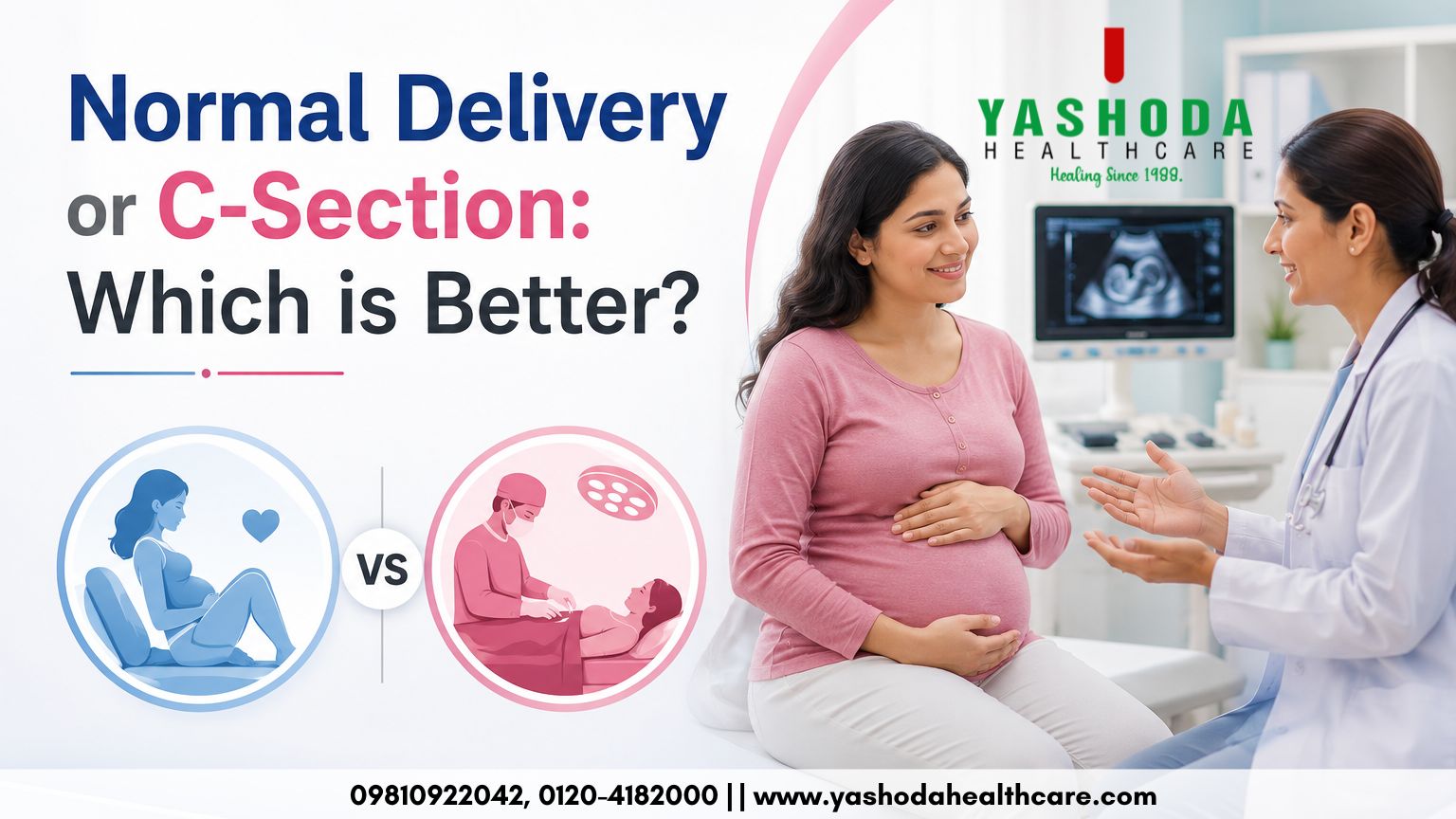
Child birth is one of the most significant experiences in a woman’s life. While many women opt for a vaginal birth (also known as normal delivery), there are several factors that may determine the kind of delivery method which is best suited for the mother, depending on the health of the mother as well as that of the baby. Both the methods, be it normal delivery or a caesarean section delivery, are safe, and widely practised methods of childbirth under the right circumstances.
What is Normal Delivery?
Normal delivery, or the normal vaginal delivery, is the natural process of childbirth, where the mother gives birth to her baby through her vagina (the birth canal). Normal delivery involves three stages typically – labour, pushing and the delivery of the placenta.
Labour is a natural spontaneous process which begins with ‘breaking of water’ that indicates that the amniotic sac has ruptured and the baby is ready to be pushed out of the woman’s body. During labour, the cervix gradually opens and thins in structure, allowing the baby to move down through the birth canal. The process of labour is accompanied with contractions and cervical dilation which indicates that the cervix is widening and opening to allow the baby to pass through.
Pushing is a voluntary practice that the mother has to do herself by allowing the baby to move and pass downwards through the birth canal. It is a rather painful experience that the woman has to bear in order to make sure that the baby is moving downward.
Once the baby is delivered and comes out of the birth canal, the placenta is delivered shortly after.
A normal vaginal delivery is possible when the pregnancy has progressed normally, the baby has been in a favourable position and there have been no or fewer complications for a natural childbirth.
Benefits & Risks of Normal Vaginal Delivery
While it may often be opted as the ideal mode of childbirth, it is important to consider the larger pros and cons of a normal vaginal delivery.
Pros –
- Recovery rate – Faster recovery is the primary benefit of a normal delivery. Mothers usually resume daily activities much sooner after a normal delivery than after a C-section.
- Lower risk of complications – Since no incision is made for a normal delivery, surgical complications such as risk of infection or excessive loss of blood is brought down to minimal or none.
- Healthier for the baby – Normal delivery exposes the baby to good bacteria and boosts their immune system. The newborn reflexes also tend to kick in much sooner for a normally delivered child.
- Shorter stay at the hospital – In most cases, women are discharged within 24-48 hours after the delivery, once they have been evaluated to be healthy and infection-free.
Cons –
- Labour pain – Probably the biggest fear in the minds of pregnant mothers is the labour pain they will have to endure during childbirth. Intense contractions and prolonged labour can be very painful and exhausting for the mother.
- Perineal tears – Pushing a baby out of the vagina may cause tears around the area, requiring stitches and post-delivery care.
- Irregular foetal heart rate – In some cases, the baby’s head or umbilical cord gets compressed during the birth process which might slow down their heart rate
Also Read:- Pregnancy Care: Tests and Scans Needed in Each Trimester
What is A Caesarean Section or C-Section Delivery?
A C-section delivery is a surgical process in which the baby is delivered by making incisions into the mother’s abdominal wall and uterus. When normal delivery appears to show risks to the life of the mother or the child, doctors usually advice to go for a C-section. However, today, it is an open option to go for after weighing in all the pros and cons of the surgery.
- Classical C-Section – A vertical incision is made in the woman’s uterus
- Elective C-Section – It is conducted in a planned manner for various foetal or maternal indications
- Emergency C-section – This is performed urgently in case of unforeseen complications during labour or foetal distress
Benefits & Risks of a C-Section Delivery
Pros –
- Convenience in delivery – Since it is a planned procedure, parents can schedule the delivery at their convenience.
- Reduced risk of birth complications – It is a surgical procedure so it reduces any foetal displacement or other complications that normal childbirth entails.
- Helps avoid vaginal trauma – There is no risk of perineal tearing or vaginal soreness in a C-section delivery.
Cons –
- Recovery rate – Compared to a normal delivery, recovery can take a longer time in a C-section delivery because of the surgical wounds. Mothers are advised complete bed rest in many cases for a month or so.
- Risk of surgical complications – While birth complications narrow down in this, C-sections are major surgeries and can cause infections, blood clots or adverse reactions post anaesthesia.
- Breathing issues in infant – Since the infant does not pass through the birth canal, the fluid isn’t expelled from their lungs, which might cause breathing difficulties in them.
How Do Doctors Decide Between a Normal Delivery & C-Section?
- Baby’s Position – Ideally, the baby should be in a head-down position for a normal delivery to take place. If the baby is in a breech position with buttocks or feet facing downwards, a C-section is best suited option. As the third trimester comes to an end, doctors examine the baby’s position to advise and opt for the best method of delivery.
- Foetal Distress – The baby’s heart rate is closely monitored throughout the labour. If the baby is not able to tolerate labour well and is not receiving ample oxygen, it leads to foetal distress, in which case a C-section is conducted.
- Labour Progression & Health of the Mother – In case of weak contractions during labour and the cervix stops dilating, or the baby does not move down despite adequate contractions, doctors may recommend a C-section to avoid complications for both the mother and the baby. If the mother’s body is not able to bear the labour pain and there is high blood pressure or heart conditions or uncontrolled diabetes, that might also lead to a C-section.
- Previous C-Section & Multiple Pregnancy – While a previous C-section delivery does not mean all future childbirths will have to follow the same course, doctors may recommend it in some cases to minimise potential risks. In case of twins or triplets, to avoid vaginal trauma, C-section tends to be the safest option.
- Size of the Baby – If the baby appears larger than average, vaginal delivery might not be the best option, especially to avoid the toll on the mother’s body.
Aside from these factors, the most important one is consent and willingness of the mother. After evaluating all the pros and cons, it is the mother’s decision, under the guidance of the gynaecologist, that is put into play.
Best Hospital & Doctors for Normal Deliveries & C-Section
Yashoda Hospital & Research Centre, Nehru Nagar, Ghaziabad is equipped with some of the best gynaecologists in Delhi NCR. The hospital offers premium healthcare and patient-centric care and service across all multidiscipline.
Dr. Shashi Arora is the Best Pregnancy Doctor & Gynecologist, also she is the Head of Department & Senior Consultant, Obstetrics & Gynaecology. She has performed more than 90,000 deliveries, 85% of which have been normal deliveries.
Dr. Jyotsana Agarwal, Senior Consultant, has more than 30 years of experience in the field. She also specialises in high-risk pregnancy care.
Dr. Kanika Agarwal is a Consultant in the Department of Obstetrics & Gynaecology. She has more than a decade of medical experience and specialises in normal deliveries, LSCS, post C-section vaginal births.
For bookings or appointments, contact us at – 9810922042, 0120-4182000.
Also Read:- DOS AND DON’TS DURING PREGNANCY