Pregnancy Care: Tests and Scans Needed in Each Trimester
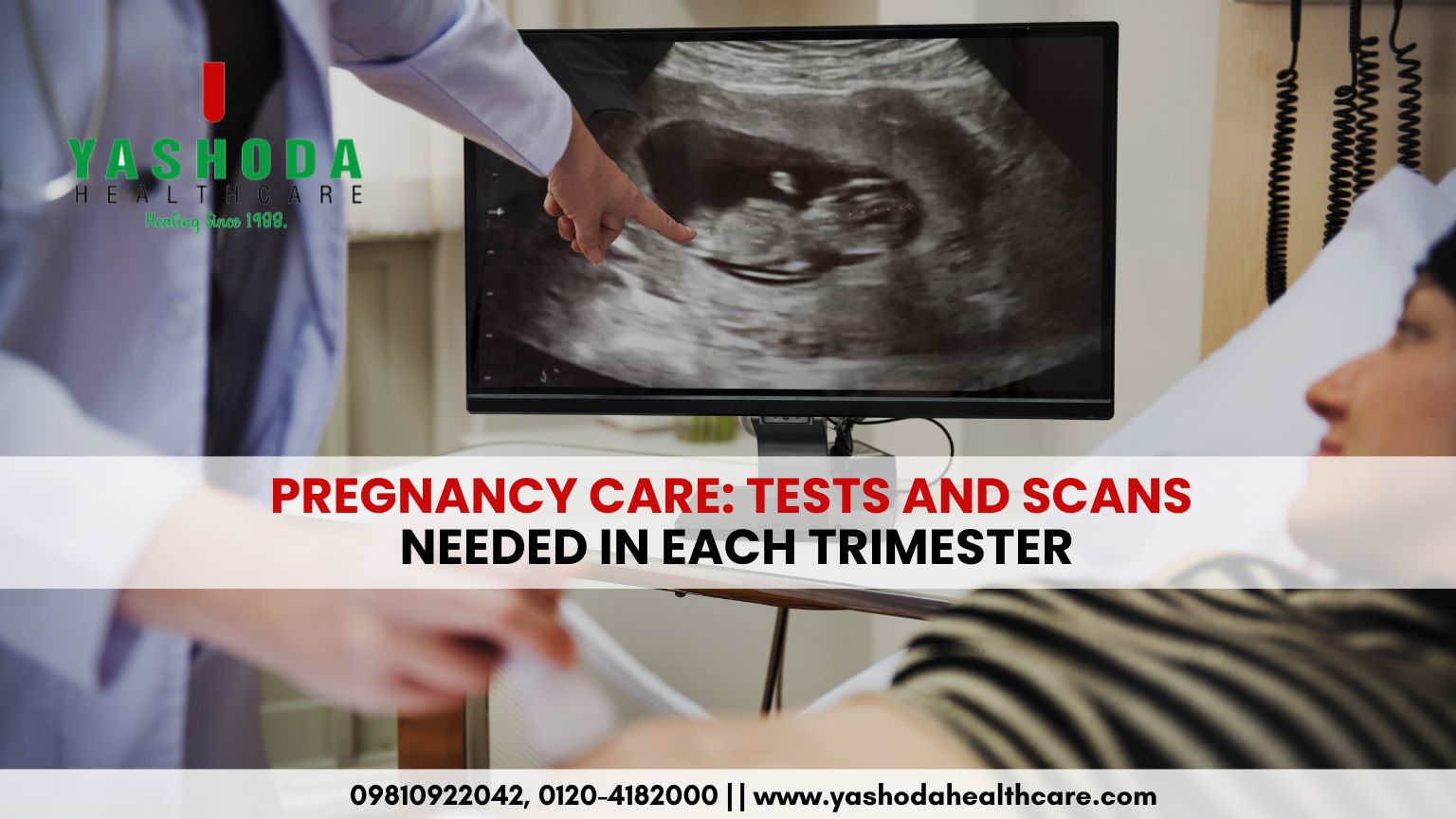
The period of pregnancy comes with more cautiousness to take care of the mother as well as the baby. Screening tests are conducted during this time to check the health conditions of both, the mother and the baby. Regular prenatal tests and scans are an important part of pregnancy care.
Many of these tests are routinely recommended for all pregnant women. However, their schedule might depend on personal and health factors such as age, medical history, existing health conditions etc.
A full-term pregnancy tends to last about 40 weeks in a woman, from the day of the last period. It is divided into three trimesters marking the distinct periods of foetal growth and physical and emotional changes in the mother’s body.
First Trimester Prenatal Screening Tests
The first trimester screening is a combination of foetal ultrasound and maternal blood testing. It can help find out the risk of any birth defects. Screening tests may be done alone or combined with other tests.
First trimester screening has three parts:
- Nuchal Translucency Ultrasound Test (NT)
Nuchal translucency screening uses an ultrasound test to assess the back of the foetal neck area for extra fluid or thickening. It is a safe, non-invasive procedure that evaluates any risk of chromosomal abnormalities such as Down Syndrome or congenital heart defects that the baby might have.
- Maternal Serum Blood Tests
These tests measure two substances found in the blood of pregnant women:
- Pregnancy-Associated Plasma Protein Screening (PAPP-A) – The placenta makes this protein during pregnancy. PAPP-A test is conducted to examine the levels of the protein. Abnormal levels are linked to a higher risk of chromosomal disorders.
- Human Chorionic Gonadotropin (hCG) – A glycoprotein hormone is produced during early pregnancy by the cells formed in the placenta, it is also often referred to as the ‘pregnancy hormone’. hCG plays a crucial role during this period.
These tests may be conducted together to find out any chromosomal abnormalities in the foetus. If the results come out abnormal, genetic counselling is advised and the expecting mother may be asked to get more tests done such as chorionic villus sampling, amniocentesis, cell-free foetal DNA and other ultrasounds.
Also Read:- Most Common Complications During Pregnancy
Second Trimester Prenatal Screening Tests
The second trimester may include several blood tests called multiple markers. They also give out information about any potential risks of having a child with certain genetic conditions or birth defects. Screening is often conducted by taking blood sample between the 15th and 20th weeks of pregnancy.
Alpha-Fetoprotein Screening (AFP)
AFP is a protein made by the foetal liver. It is a fluid around the foetus (amniotic fluid) that crosses the placenta into the mother’s blood. The blood test measures the level of alpha-fetoprotein in the woman’s body during pregnancy. Abnormal levels of AFP may be a sign of –
- Down syndrome
- Chromosome problems
- Detecting the possibility of twins
- Open neural tube defects such as spina bifida
- Problems in the abdominal wall of the foetus
Other markers that are made by the placenta are –
- Human chorionic gonadotropin hormone
- Estriol
- Inhibin
Abnormal results of AFP or any other markers mean that the mother needs more testing. An ultrasound is often conducted to determine the due date. It also helps find out any other body problems. Having both first and second trimester screening tests done is important to rule out any problems and the possibility of a false detection of health concerns.
The second trimester involves tests like –
- Routine Prenatal Monitoring – To check the vitals along with body weight.
- Anomaly Scan (Level 2 Ultrasound) – All aspects of a baby’s organ development, placental position, amniotic fluid levels and overall foetal growth are assessed via an ultrasound. It plays important role in detecting structural abnormalities in the foetus.
- Maternal Serum Screening Tests – Triple marker tests or quadruple marker tests come under the maternal serum screening tests that help assess the risk of genetic and chromosomal conditions in the foetus.
- Gestational Diabetes Screening – Between 24 and 28 weeks, this test may be conducted which typically involves a glucose test to see how the body processes sugar. Early diagnosis is important as untreated gestational diabetes can lead to excessive foetal growth, difficult delivery or newborn health concerns.
- Cervical Length Assessment – Ultrasound tests are conducted to measure cervical length. A shortened cervix might indicate the increased risk of premature delivery. In women who have history of preterm birth or other risk factors, this test helps reduce the risk.
- Follow-Up Blood & Urine Tests – These are conducted to monitor haemoglobin levels, detect any infections and assess overall maternal and foetal well-being.
Also Read:- Normal Delivery or C-Section: Which is Better?
Third Trimester Prenatal Screening Tests
- Growth and Well-Being Ultrasound Tests – These help assess the size of the baby, growth pattern, its position and also help evaluate amniotic fluid levels and placental health.
- Doppler Studies – For high-risk pregnancies, doppler ultrasound may be recommended by the doctors to assess blood flow through the umbilical cord and foetal blood vessels. It also helps assess the oxygen and nutrients level reaching the baby.
- Foetal Movement Monitoring – During the third trimester, the foetus develops significantly to move inside the womb and any decrease in the activity can point towards potential risk in foetal development.
- Non-Stress Test (NST) – NST monitors the baby’s heart rate and how well it responds to movement. It may be conducted when there are concerns about foetal well-being in order to reassure that everything is going well.
- Group B Streptococcus (GBS) Screening – Typically performed between 35 and 37 weeks of pregnancy, this test helps identify bacteria present in the birth canal. If it comes out positive, the mother might be prescribed antibiotics during labour to reduce the risk of transmission.
- Pre-Delivery Assessment – Towards the end of the third trimester, final tests are conducted to evaluate the baby’s position, estimate its size and discuss delivery planning with the mother.
Right from confirming the pregnancy in the first trimester to assessing the growth and development of the foetus, and finally delivering the baby in a healthy state, pregnancy care is equipped with these tests and screening must be done at every step to assure a safe and sound childbirth.
Best Hospital & Doctors for Pregnancy Care in Delhi NCR(Ghaziabad, Noida)
Yashoda Hospital and Research Centre, Nehru Nagar, Ghaziabad, is one of the best multi-speciality hospitals in Delhi NCR, serving across multitude of super specialities. Our gynaecology department is equipped with some of the best OBGYNs in Delhi NCR.
Dr. Shashi Arora is the HOD & Senior Consultant, Obstetrics & Gynaecology, and one of our best OBGYN doctors. She has performed more than 90,000 deliveries, 85% of which have been normal deliveries.
Dr. Jyotsana Agarwal, Senior Consultant, has more than 30 years of experience in the field and also specialises in high-risk pregnancy care.
Dr. Kanika Agarwal is a Consultant in the Department of Obstetrics and Gynaecology. She has over 10 years of medical experience and specialises in normal deliveries, LSCS, post C-section vaginal births.
For bookings or appointments, contact us at – 9810922042, 0120-4182000.
Also Read:- Obstetrician-Gynaecologist: Who Are They & When is The Best Time to Visit Them?