Most Common Risk Factors of Inflammatory Bowel Disease (IBD) – Symptoms, Treatment & Best doctors
What is Inflammatory Bowel Disease (IBD)?
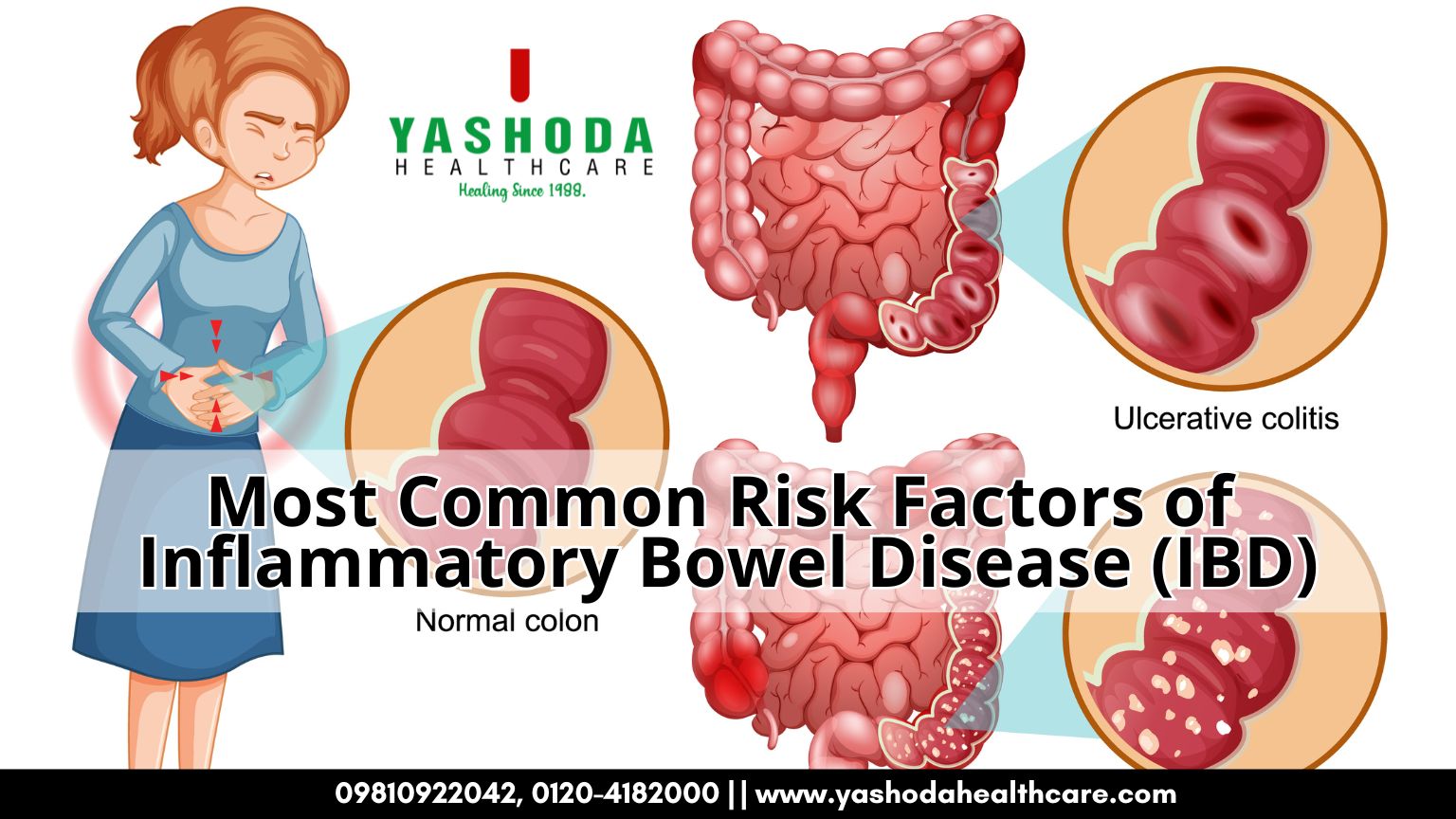
Inflammatory Bowel Disease (IBD) is a group of chronic disorders that causes prolonged inflammation of the digestive tract (bowels) in people. It includes – Crohn’s disease and ulcerative colitis.
- Crohn’s disease is a condition that can affect any part of the gastrointestinal tract (mouth to anus) and spread deep into the bowel tissues. It typically attacks the small intestine.
- Ulcerative colitis causes prolonged inflammation and ulcers in the innermost lining of the large intestine (colon or rectum).
Symptoms of Inflammatory Bowel Disease (IBD)
Symptoms of Inflammatory Bowel Disease (IBD) may appear suddenly, causing intense cramps and diarrhoea, impacting the overall physical health and emotional well-being of an individual. Unexplained weight loss, chronic fatigue, fever, loss of appetite are other common symptoms of IBD.
Key Risk Factors for Inflammatory Bowel Disease (IBD)
- Genetics and Family History – The most common of all is genetics. Having a first-degree relative with the Inflammatory Bowel Disease (IBD) significantly increases the chances and risk as specific gene mutations alter how the body’s immune system responds to bacteria.
- Environment and Geography – Environmental pollutants and presence of less gut microbes in people living in cities have made them more prone to Inflammatory Bowel Disease (IBD).
- Lifestyle Factors – Unlike the uncontrollable and somewhat non-modifiable factors such as genetics or environment, lifestyle factors are fairly modifiable –
Consumption of tobacco – Smoking is the biggest risk factor for developing Crohn’s disease.
Diet – Heavily processed food items, refined sugar, animal fats and food low in f ibre are linked to an increased risk of Inflammatory Bowel Disease (IBD).
Over-consumption of antibiotics – Frequent and heavy use of antibiotics can impact the beneficial gut bacteria and increase risk of Inflammatory Bowel Disease (IBD).
Other medications – Frequent use of NSAIDs (Nonsteroidal Anti-Inflammatory Drugs) such as ibuprofen, naproxen or aspirin can irritate the gut lining and be a potential risk factor for Inflammatory Bowel Disease (IBD). Oral contraceptives are another such medication that can harm the gut and result in similar effect.
How is Inflammatory Bowel Disease (IBD) treated?
Inflammatory Bowel Disease (IBD) is an illness for a lifetime with no cure as such. While treatments do exist for preventing it from affecting your daily life, eradicating the disease fully may still not be possible.
Treatment of Inflammatory Bowel Disease (IBD) depends on what type of disease the patient has (Cohn’s disease or ulcerative colitis). All treatment methods of Inflammatory Bowel Disease (IBD) aim at bringing the disease into control. For this, medications may be primarily prescribed.
Depending upon the type of Inflammatory Bowel Disease (IBD), the doctor may prescribe medicines for treatment –
- Antibiotics may be prescribed if the infection is from an anal fistula
- Antidiarrhoea medication is prescribed in case of Crohn’s disease
- Biologics are prescribed to calm the body’s immune system, so it does not trigger Inflammatory Bowel Disease (IBD) by releasing any antibodies
- Corticosteroids are prescribed to reduce inflammation
- Immunomodulators and immunosuppressants are prescribed to calm the immune system
Surgery for Inflammatory Bowel Disease (IBD)
While Inflammatory Bowel Disease (IBD) medication goes a long way in suppressing effects and making daily life better, if they fail, the doctors might recommend surgeries like colectomy. It is a bowel resection surgery where part or all of the large intestine (colon) is removed. It changes the lifestyle of a person and hence surgeries are recommended only as the last resort to treat Inflammatory Bowel Disease (IBD).
Best Hospital & Doctors for Treating Inflammatory Bowel Disease (IBD)
Yashoda Superspeciality Hospital & Cancer Institutes, Sanjay Nagar is one of the best superspeciality hospitals in Delhi NCR. We offer comprehensive treatment and care for all types of super specialities and cancers, as well as other diseases and disorders. A beacon of the most veteran and celebrated super-specialists, with years of training and practice in the field, Yashoda Hospital, Sanjay Nagar promises cutting-edge care in treatment and recovery of patients suffering from Inflammatory Bowel Disease (IBD).
Dr. Manish C Kak, Chairman and Head, Yashoda Institute of Liver and Digestive Sciences, Yashoda Hospital, Sanjay Nagar, Ghaziabad is a Gastroenterologist and Liver specialist with more than two decades of experience. Dr. Kak is known for his expertise in gastroenterology, hepatology and endoscopy. His specialisations also extend to pancreas, digestion and intestinal diseases and disorders. He is also a Fellow of the American College of Gastroenterology and also happens to be a distinguished member of various international and national medical associations.
For bookings or appointments, please call at 98107 09038, 0120-4612000.