Why Do Kidney Stones Keep Coming Back?
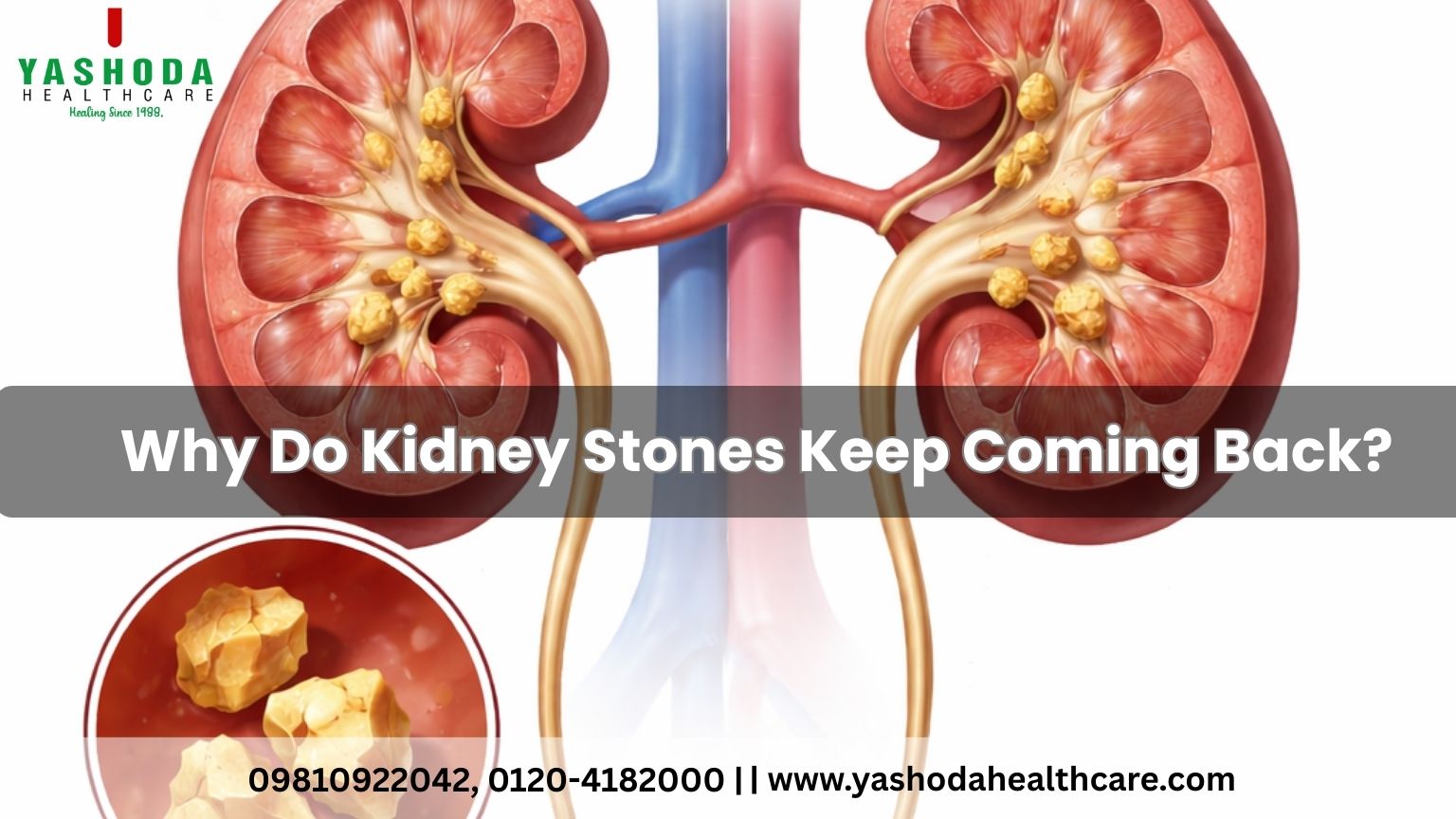
Kidney stones are hardened lumps of crystalised minerals that deposit in the kidneys. They can be formed anywhere in the urinary tract, from the ureter to urethra or the urinary bladder. They may be caused due to several reasons such as – dehydration, infection, UTIs, diseases or genetic disorders.
Common symptoms of kidney stones include hematuria/bloody urine, cloudy or smelly urine, frequent urination, discomfort in passing urine or intermittent urination. The residual urine accumulates minerals over time to harden and crystalise and form kidney stones.
While there are medical procedures to treat kidney stones, they are seen to be recurring in some people. There could be several reasons for the same:
- Dehydration – The biggest cause for recurrent kidney stones is dehydration. Often sidelined and less thought of, drinking plenty water and fluids is the most basic but important habit that could aid in avoiding recurring kidney stones. Absence of plenty fluids to flush out toxins and hardened crystals, help them accumulate even more, creating discomfort and more severe issues in the kidneys.
- Diet – Excessive consumption of processed food or intake of food with higher salt concentrates increase high sodium intake and calcium levels in the blood, which help the formation of kidney stones. Excessive animal protein or higher oxalates (found in nuts, fruits, veggies and grains, or lower calcium) are another additional reason. Such food should be consumed in moderation.
- Genetic reasons – Some people inherit a tendency to form stones due to how their bodies process minerals. Kidney stone running in the family increases the likelihood of its recurrence in an individual. Other inherited conditions like calcium metabolism or oxalate production can also lead to kidney stones.
- Other diseases like gout, diabetes, inflammation, hyperthyroidism, can also lead to kidney stones due to their effect on urine alteration.
Prevention & Treatment
Assessing the frequency of recurring stones should be the first step in managing and preventing it. Management starts at home with healthy lifestyle habits:
- 1. Hydrate yourself well – Drinking plenty water and fluids should be a must. It dilutes the urine and prevents kidney stones from growing further. A minimum of 10-12 glasses of fluids in the form of water and other electrolytes should be consumed on a daily basis.
- Lower intake of animal protein in diet – Dieticians recommend to consume only 170g to 220g of animal protein on a daily basis. Intake of more fruits and vegetables in diet should also be increased as they prevent stones from returning.
- Limit sodium intake in the form of salt in diet. Other components like fast food, processed and packaged food, should also be reduced. More the amount of sodium, more calcium is formed in the urine, which deposit to form stones.
- 4. Watch your calcium intake – While the consumption of calcium is needed for a healthy dietary practice, too much calcium in the form of supplements can actually increase the risk of kidney stones forming.
- Limiting food items with higher oxalate content – Oxalate is a natural salt-forming compound from minerals present in food items. While generally harmless in nature, higher content of oxalate-rich foods on a regular basis actually leads to calcium deposition and increased risk of kidney stones. In fact, calcium oxalate stones are the most common types of kidney stones which form due to the combination of calcium and oxalate in the urine. Food items like – beetroots, spinach, nuts, soy products, are all rich in oxalate content.
Best Hospital for Kidney Stones Treatment
Yashoda Hospital & Research Centre, Nehru Nagar, Ghaziabad, has the best urologists who offer a wide range of services to treat patients with all kinds of medications and surgeries such as Extracorporeal Shock Wave Lithotripsy (ESWL), Percutaneous Nephrolithotomy, Ureteroscopic Stone Removal, etc. for the removal of stones related to the urinary tract.
Dr. Pradeep Prakash is one of the finest urologists and uro-oncologists with more than 16 years of experience in the field of urology. He specialises in performing minimally invasive robotic surgeries for prostate cancer, kidney cancer and bladder cancer along with kidney reconstruction surgery, kidney and ureteral stone removal, etc. with great precision and care.
Dr. Vikas Bansal is an expert with over a decade of experience in issues pertaining to stones in kidneys or bladder, UTIs, urine continence, as well as male infertility and erectile dysfunction.
Dr. Anuj Jain is a highly trained Consultant Urologist and Andrologist with extensive experience in managing a wide spectrum of urinary and male reproductive health conditions.
For appointments/bookings, please contact us on our helpline number – 9810922042/0120-4182000.
Read Also👉:- Bladder Stones: Symptoms, Causes, and Best Treatment Options